A finished painting is not one post. It is a small archive.
There is the first mark, the reference image, the color decision that changed the mood, the section you nearly painted over, the texture that only appears close up, and the reason the work exists at all. Most artists already have this material. The problem is that it stays scattered in a camera roll, a sketchbook, or memory until the painting is posted once and abandoned.
A better content planning strategy for visual artists is to treat each painting as a month-long editorial project. You document the work once, sort what you captured by purpose, and publish a sequence that lets people discover the piece, understand it, and eventually decide whether they want to own it.

The painting is the source material, not the post
The common mistake is to make the finished artwork carry every marketing job at once. One image is expected to introduce the painting, explain the story, prove the artist’s skill, create conversation, and sell the work. That is too much pressure for a single square.
Instead, assign each piece of content one job. A close-up can create curiosity. A process clip can demonstrate how the work was made. A caption can give the painting a point of view. A studio photograph can make the artist feel present. A sales post can answer practical questions about availability, size, materials, and shipping.
This approach also fits the advice in Saatchi Art’s guide to social media for artists, which emphasizes showing the work as it develops rather than presenting only a finished object. The process is not filler around the art. It is part of the story collectors are being invited into.
Capture four kinds of evidence before you publish
Before planning dates, create a small asset bank. You do not need a studio production or a new camera. You need enough variety that the audience can encounter the same painting from more than one angle.
- Proof of making: short clips of drawing, mixing, brushing, scraping, correcting, or cleaning up.
- Proof of looking: details, edges, layered surfaces, color studies, and the painting under different light.
- Proof of meaning: a note about the source, question, place, memory, or visual problem behind the work.
- Proof of ownership: the finished piece in the studio, on a wall, beside a person for scale, or accompanied by clear purchase information.
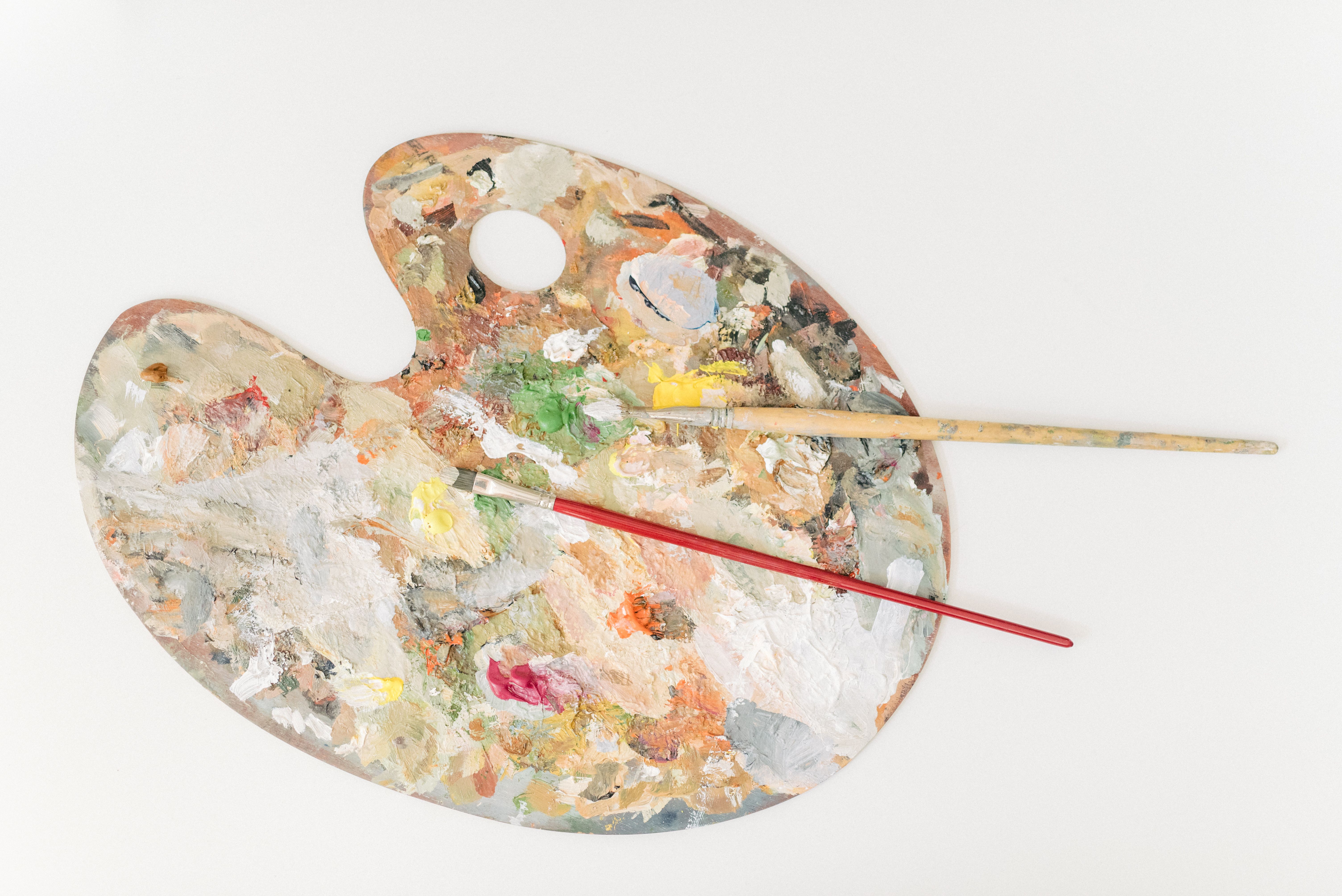
Photograph vertically as well as horizontally. Record a few silent clips of your hands working; they can later become Reels, Stories, short videos, or the moving background for a voiceover. Write down the phrases you say naturally in the studio. Those phrases are usually better captions than polished statements written weeks later.
A four-week content plan for one painting
The schedule below assumes two substantial posts each week, with optional Stories or short updates between them. That is deliberate. Saatchi Art’s artist guidance suggests a sustainable rhythm of two to four posts per week, while Hootsuite’s content planning guidance recommends balancing educational, entertaining, inspiring, and promotional purposes. The exact days matter less than giving each post a distinct job.
| Week | Post one | Post two | Primary job |
|---|---|---|---|
| Week 1 | A cropped detail, unanswered question, or early sketch | A process clip showing the painting taking shape | Attract attention and create curiosity |
| Week 2 | A carousel of palette, tools, reference, and work-in-progress images | A short explanation of one difficult decision | Build familiarity and trust |
| Week 3 | The full reveal with title, medium, dimensions, and story | A close-up or studio context image | Help people see and remember the work |
| Week 4 | An educational post about technique, color, or composition | A direct availability or collector invitation | Serve the audience, then invite action |
This is not a command to repeat the same caption eight times. Each post should answer a different question. What am I looking at? How was it made? Why did the artist make that choice? What does the surface feel like? Where would this work live? Is it available?
Week 1: Lead with the unfinished question
Do not open with the final image if the process has a stronger hook. Use a cropped section, a charcoal drawing, or a photograph in which the painting is partly obscured. The caption might explain what was not working yet: “The lower corner was too quiet, so I changed the temperature rather than adding detail.”
The second post can show movement. A six-second clip of a brush crossing the canvas is enough if the viewer understands what is changing. Add a caption that gives the action context, not a generic “studio day” label. “I kept removing this blue because it made the foreground feel separate from the rest of the painting” gives the audience something to notice.

Week 2: Turn decisions into useful content
Artists often worry that explaining their process will make it less mysterious. In practice, a specific decision gives the viewer a way into the work without dictating what they must feel. Talk about a failed passage, a limited palette, an unexpected mark, or the point at which the painting stopped resembling its reference.
A carousel is particularly useful here. Slide one can show the work in progress; the following slides can show the palette, a detail, the surrounding studio, and a short text slide. The sequence should not be a random photo dump. Think of it as a guided walk around the painting.
For artists who prefer batching, a content planner from Adobe Express to boost your efficiency can help turn the asset bank into a visible queue. The tool is not the strategy. The strategy is deciding what each asset is for before placing it on a calendar.
Week 3: Reveal the whole work, then slow down
The reveal is the obvious centerpiece, but it should not be the only time people see the complete painting. Give the post the information a viewer needs to understand the object: title, medium, dimensions, completion date if relevant, and whether it is available. If the work is not for sale, say what the next step is instead: a studio visit, exhibition, print release, or email announcement.
Follow the reveal with a detail or a photograph that shows the work at a human scale. Many paintings look impressive on a phone but become more tangible when viewers can see the edge, the surface, or how large the canvas is relative to a room.
Week 4: Teach first, sell without apologizing
One educational post can extract a lesson from the painting without turning it into a tutorial series. Explain how you kept a dark color luminous, why you left an area unresolved, how you tested the composition, or what you look for when photographing artwork. The lesson should stand on its own even for someone who never buys the painting.
Then make the final post direct. A clear invitation is more useful than vague enthusiasm: “This painting is available through the link in my bio,” “Two works from this series remain,” or “Join the collector list for the next release.” Selling is not a betrayal of the process you have just shared. It is the honest conclusion of making the work visible.
Measure the month by signals, not applause
Likes are easy to notice and poor at explaining what happened. Review which posts earned saves, shares, replies, profile visits, website visits, inquiries, and sales. A process clip with modest reach but several thoughtful messages may be more valuable than a broad post that disappeared from memory in a day.
Keep a short note after each week: which image stopped you while editing, which caption was easiest to write, and which question people asked without prompting. Those observations become the brief for the next painting. Over time, your calendar stops being a list of obligations and becomes a record of what your audience is genuinely trying to understand.
The rule that keeps the system humane
Do not force every painting to produce the same number of posts. A complex, slow-made canvas may support a month of material; a small study may need only a reveal, a detail, and a note about what it taught you. The point is not to squeeze content from the work until it feels exhausted.
My view is simple: the best artist content does not make the audience watch you market a painting; it lets them watch the painting become meaningful. Document the decisions while they are fresh, give each post a different purpose, and leave enough space between the posts for people to form their own relationship with the work.
How this strategy was put together
This framework was built for solo visual artists who want a sustainable social media content calendar rather than a daily posting quota. It draws on Saatchi Art’s 2025 guidance for artists, Hootsuite’s current content-planning recommendations, and the supplied Adobe Express scheduling resource, all checked in October 2026. The four-week sequence is an editorial framework, not a claim that every platform or audience will perform identically. Recheck platform formats and scheduling features before committing to a long campaign.